
Old Forester 1920 “Prohibition Style” Bourbon
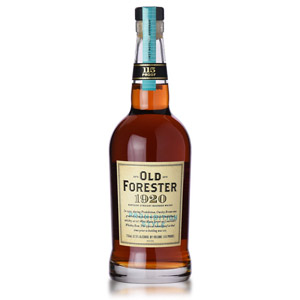
Brown Forman’s Old Forester brand, in an attempt to avoid being left in the dust of the whisky hype train, is releasing a series of special-edition whiskies in honor of the brand’s history of per-Prohibition distillation. … uses a mashbill of 72% corn, 18% rye, and 10% malted barley (for enzymes), the same as other Old Forester bottlings, and is by law at least 4 years of age. The 115 proof (57.5% ABV) is the distiller’s estimate of the probable bottling proof that would have been used during Prohibition for whisky intended for “medicinal purposes”.
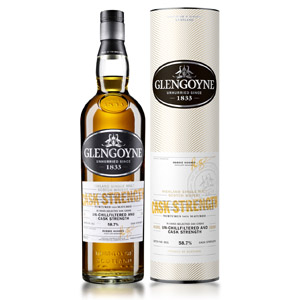
Glengoyne Cask Strength (Batch 4)

Glengoyne’s whisky is distilled from Golden Promise barley, a low-yield heritage strain of barley used rarely in today’s big-volume whisky industry (The Macallan is also known for using the strain). Glengoyne is also notable for the speed of its distillation (purportedly the “slowest” in Scotland), its total lack of peat even in the process water, and its location very near or perhaps on top of the invisible line dividing the Highlands and the Lowlands of Scotland. The Cask Strength batches are bottled without added coloring and without chill-filtration.

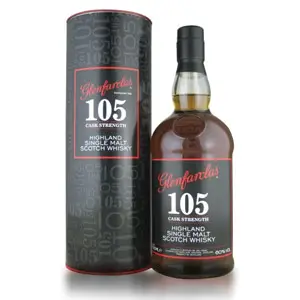
Glenfarclas 105 Cask Strength

Glenfarclas has been known in whisky circles as a way to get old-fashioned, independently-distilled, sherry-forward single malt at insider prices. … The ‘105’ in the name refers to the proof, which in the British proof system is 60% ABV. Around here we use the US proof system, which means the 105 is actually 120. Got it? … Glenfarclas uses only sherry casks to mature whisky, which previously held oloroso or fino sherry, and are either 500 liters (butts) or 250 liters (hogsheads).