
Hello, readers! Today is another post in my series of beginner’s guides to the world of whisky. (See my previous article about how to taste whisky). Before you can taste it, though, you’ve got to know how to pick a whisky to try! This post will focus on single-malt scotch, which I think is the best possible place to get your bearings in the wider world of whisky.
Single-malt scotch is whisky distilled and aged in Scotland from only malted barley and water. It must be aged at least three years in oak barrels to be called ‘scotch’, and it cannot have any additives other than water and caramel coloring (which has no flavor but is used to ‘adjust’ the color of whisky). Scotch is either peated or not. When peated, the whisky tastes of smoke and earth, which comes from peat smoke from peat fires used to malt aka. germinate and dry the barley. Peat can be an acquired taste, and is generally not something that beginners should start with (although I did… oops!).
Scotch is always aged in oak barrels. Sometimes, however, those barrels previously held other contents such as bourbon or other whisky, wine, sherry, madeira, port, rum, calvados, etc. These previous contents still exist within the wood fibers of the barrels, and will affect the flavor of the scotch stored in them. The longer the aging in these barrels is, the more pronounced the impact of the barrel’s previous contents. If a scotch is aged solely in one of these barrels, it is said to have been “matured” or “aged” in that type of barrel (e.g. sherry-aged or ex-bourbon-matured). If the whisky spent only a short period of time (usually at the end of its aging process) in one of these barrels, it is said to have been “finished” (e.g. Sauternes-finished or port-finished). Even six months spent in an ex-wine cask is long enough for scotch to pick up many interesting flavors.
Age is an important factor in the flavor of scotch, but is not always a reliable way to determine its quality or even predict its flavor. A 12 year-old Glenlivet costs around $25 a bottle, while a 12 year-old Lagavulin costs $99 a bottle! (16 year-old Lagavulin is around $65). Price is (usually) a better indicator of quality. See my pricing guidelines on this post to see how I view price-versus-quality of scotch.
Finally, alcohol content can vary between 40% ABV (alcohol by volume), which is the legal minimum for scotch, and upwards of 70% ABV or more. Most ‘standard’ distillery bottlings fall between 40% and 50% ABV. These have been diluted with local water to reach this strength, because the whisky is of a much higher strength direct from the barrel. Some bottles are “cask strength”, and have not been watered down. These can be very difficult to drink straight, and are not recommended for beginners.
Here is a short list of single-malt scotches that I consider good starting points for beginning whisky drinkers. These are all meant for drinking ‘straight’ (without mixing with anything except maybe a little water) and should provide a good introduction to single-malt scotch.
* The Balvenie DoubleWood (12 years old) – matured in a combination of ex-bourbon and ex-sherry barrels, this Speysider is an instant classic and one of the easiest-drinking malts around. It’s an especially good value at $36-$40 a bottle.
* Dalwhinnie (15 years old) – one of the gentler drams, it’s a Highland whisky with notes of honey and heather. Very soft on the palate. Around $55.
* The Macallan (12 years old) – matured exclusively in ex-sherry barrels, this very popular malt is heavy on the plum, raisin, and sweet syrupy notes. A pretty good bargain at $45.
* GlenDronach (12 years old) – I prefer this to The Macallan. It’s the same style (100% ex-sherry barrels), but has a meatier, more savory quality. Decently priced as well at $45.
* Oban (14 years old) – another Highlander like Dalwhinnie, this dram exemplifies the style, with tons of honey and lots of floral, heathery aromas. Sweet like golden raisins and honey. You pay for this quality, though, at $60 a bottle.
* Highland Park (12 years old) – a steal at $40 a bottle, this dram from the isle of Orkney is mildly sherried, which gives sweetness, but also contains flavors from the island’s unique type of peat. The result is a citrusy, smoky, sweet combination that makes a category by itself.
If you want to try the smokier peated style of whiskies, your best bets are:
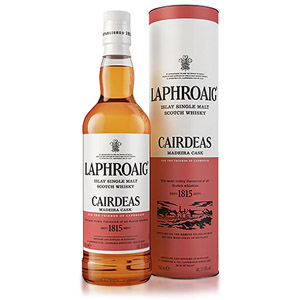
* Laphroaig (10 years old) – somewhat rough, but this is one of the best values in scotch, at around $33 a bottle. This was my first scotch. It’s very intensely smoky, and contains hints of seaweed and seasalt.
* Caol Ila (12 years old) – a milder cousin to Laphroaig, Caol Ila is peated, but also muted enough to serve as a good introduction to smoky whiskies. Caol Ila is often used in blended whisky because its mildness doesn’t overwhelm other malts.
* Talisker (10 years old) – one of my favorites, Talisker is peated, but also has a unique mineral character that truly tastes like the rocky sea-battered island coastline where it’s made. A pricier malt, but worth it at $50 a bottle.
If you really must try a cask-strength scotch, go for:
* The Glenlivet Nadurra – If it’s possible for something that’s 53% alcohol to be gentle, this is it. Classic Speyside flavors, with plenty of sweetness balanced by green fruit and apple notes. The perfect introduction to cask-strength scotch. You can always dilute it with water if the burn is too great.
Enjoy!


Great post! You really nailed a lot of good options here.
Might I also suggest:
Auchentoshan 12 – often recommended for beginners because the triple distilled style is said to produce a whisky with less “harsh” alcohol taste. Whether or not it does, it’s a great tasting and easy-to-drink scotch.
Bowmore 12 – this would be my pick for a beginner-level peated whisky. It’s not the cheapest Islay, but it’s very mild and balanced with only a little bit of smoke. Caol Ila may be similar, but Caol Ila can be hard to find in some countries (Australia, for instance).
Good suggestions! I’m drinking whisky for some years now and consider myself far from an expert. What I remember the most of my first few visits to the ‘whisky shop’ is that it was really hard to pick a bottle from the shelf and know (or rather hope) that it will be a good one!
I had really no idea what to buy, what would sooth my style… Some years later I have some idea of what I like.
Again, very helpfull if you really don’t have any idea where to begin, like me back then.
Cheers!
T.J.
Excellent suggestions. I’d add only that a Laphroaig or a Caol Ila, though wonderful to veterans, could be a real turn-off to the uninitiated. Better to start sweeter, with a Balvenie or a Macallan (or the Glenmorangie “Original” or Glenfiddich 15) and then get smokier — perhaps with an Ardmore Traditional Cask or even a Highland Park 12 as an introduction to peat before facing something as imposing as the mighty Laphroaig 10.
I agree with most of your suggestions, although I’d also recommend Aberlour 10, as it is both very good, and far less expensive than some of the other expressions that you’ve recommended. Again, with the prices: Aberlour 10 is $45, Balvenie 12 DW is $69, GlenDronach 12 is $60, Macallan 12 is $90, and Talisker 10 is $75. The Talisker 10, as you’ve pointed out is also a good choice (especially for a milder peated dram that won’t frighten people), as is the Balvenie Double Wood, but from a price point perspective, I’d recommend the Aberlour 10.
I have been drinking scotch for a while, but for some reason have not stumbled upon a smokey, peated scotch… thanks for the suggestions..
Also @Dan
I’m not sure where you you shop, but i get balvenie 12 dw for $40
the macallan 12 for $40 and the talisker 10 for $50
In Ontario, Canada, where the sale of most alcohol is done through the Liquour Control Board of Ontario (LCBO; a Crown Corporation; all spirits, imported beers, etc.), The Beer Store (all domestic and some American and some imported beer; The Beer Store is operated by the larger brewing corporations), or The Wine Rack (which sells wine). The LCBO controls the prices, and you don’t have a lot of choice. Those of us near the Ontario / Quebec border can run across to the SAQ (the Quebec version of the LCBO), but the prices there are not much different (some things are cheaper, and some things are more expensive).
For what it’s worth, I am just about through my first bottle of Glenmorangie Orig. Very enjoyable. A little bit of a burn in the middle, but flavorful.
And if you are ready for a sherry bomb, pick up Aberlour A’Bunadh for $60.
heard a lot of good things about this one….will be my next bottle…looking forward to it. I also really enjoyed the Balvenie DW…
Before finding this site I bought Highland Park 12 as my first ever purchase. Initially I was not impressed, but your lessons on tasting and water were quite helpful – thanks! However, I really was looking for the smokey peat flavor of some unknown but wonderful scotch I tried at a party (alas, there is no way to discover what it was…). I have not been able to stop thinking about this! Do you still hold with your 3 smokey peat recommendations above or might there be something else?
LW,
Of course there are a ton of peated whiskies out there (including some peated blends), but my favorites are still Talisker 10, Lagavulin 16, and Laphroaig 10. Ardbeg 10 is another classic. Caol Ila 12 are Bowmore 12 are pretty good too.
Thank you. By the way, I was in the store and picked up Laphroaig Quarter Cask. As a total newbie I thought this was skipping and that I should “pay my dues” with the 10 and learn… something, but that’s just crazy talk. What you have helped me understand (I think) is there are no rules.
Thanks! I’m starting to think I won’t go wrong with Lagavulin 16.
P.S. Thank you for this wonderful and unique website. Your passion is undeniable. I still am not sure if you either have the most amazing palate or a gift for creative writing :-), but it doesn’t matter. It’s fun to read!
Thank you so much for this! I’ve been trying to research, wanting to make a good choice – I can’t wait to go shopping now 🙂
At the bar the bartender gave me a glass of scotch….it was. Very good smooth andeasy to drink…..very similar taste to a buttery nipple…..but it was scotch……any ideals what thiswould have been?
@Campbell
Unfortunately, that description covers most scotch. 🙂 If it was butterscotch and caramel like, it was probably ex-bourbon or not aggressively cask finished. Definitely not peated… probably not heavily sherried. Balvenie DoubleWood 12 is a possibility, as are a lot of other Speysiders. Without knowing the approximate price of the bottle, it’s hard to narrow it down any further. Obviously, the more you pay, the “smoother” and easier it will be to drink (in general).
Thank you….maybe a Glenlivet ….. Would there be taste difference between 12 and 15 yr? Or is it just aged….longer?….I don.t want to spend 40+$ on a bottle I may never finish….its unfortunate…they dont sell smaller bottles
@Campbell
Yes, Glenlivet 15 tastes different than the 12 (which is a little rough), because they age it the additional 3 years in “virgin” (unused) French oak. This makes it nuttier. Personally, I think Glenfiddich 15 (which also uses some new oak, but also some sherry oak) is better. Cheers!
I just bought a Glenlivet Tasting Kit that includes small bottles of 12, 15 and 18. They are 220 ml bottles and the package was about $50
Where did you find your kit?
I opened a Lagavulin 16 tonight as I’m watching the election results. This is my first Lagavulin 16…I paid close to $90 in Georgia. Simply put, this is probably the greatest thing I have ever tasted. Previous to tonight my favorite was the Ardbeg 10…a really good Islay. Lagavulin 16 is better. I can’t believe it took 42 years for me to find and really appreciate good Scotch…perhaps it’s only now now that I can afford 😉
I picked up a bottle of Highland Park 12 for my first bottle at home. Quite happy with it at price of $35. I am anxious to try many others and narrow my preferences. Thanks for the help on you site.
I just found your website! Very informative. A friend wants to start drinking Scotch,so I said I would help him out. I recommended Laphroaig! Sorry! After I found your column, I called him and told him not to get it for his first bottle. I gave him some of your suggestions.I look forward to reading your views again.
@Jnm,
Thanks for your comment! Laphroaig was actually my first single-malt, so it’s not that bad of an idea. It’s a fantastic value, which is very appealing. I think starting there, though, is like diving headfirst into the deep end of the pool. You may come up swimming, but some people may have a bad experience that turns them off scotch forever. Cheers!
Hello ScotchN00b! Love your site and find myself pouring over the articles to the dismay of my bosses at work it seems. It’s worth the risk though 🙂
I have recently discovered my love of scotch. I have been a Crown Royal/Gibsons drinker for quite a few years but have recently aged up in my spirits’ tastes!! Recently I have decided to start buying a good bottle of scotch every couple of weeks and your site has been a tremendous help.
I started with a Macallan 12yr couple weeks ago and was very happy with the Sherry cask taste which is why i have the Glendronach on top of my list. (plus the price is the cheapest in it)
Here is my ScotchN00b list of the 1st 5 I will be buying. Good news is ALL are available and in stock in my local BC Liquor Store here in Canada. Prices are as listed on their site and makes me wish i was in the US!! Oh well. that is the price you pay for good liquid gold!!
What do you think of my picks? (They are mostly all your Must Haves and now mine too!!)
Glendronach 12 yr “The Original” 63.99
(Mmm Sherry sweet love of sherry)
The Balvanie 12yr Doublewood 79.99
Glenmorangie Nectar D’Or 88.95
(CANT WAIT to try this one!! Sounds Amazing!!)
Kilchoman Machir Bay – 88.95
(My 1st foray into peat)
Aberlour a’bunadh – Cask Strength 93.95
(I love a strong drink and am very excited to try this one too for those cold winter nights in Canada)
Chad,
That sounds like a great start! Those are all excellent picks, and I think you’ll enjoy all of them. The Machir Bay is a very good way to start in on peat, as it’s representative of the Islay style without being as “in your face” as Ardbeg and Laphroaig, but it has a very high level of quality. On the other hand, it’s a lot of money to spend if you end up not enjoying peat. If you can find a bar with a bottle of Lagavulin 16 or an Ardbeg on the shelf, it might be worth the $10-$15 for a glass to find out. Glad you’re enjoying the site. Enjoy and cheers!
Wow, those are steep prices. Your Doublewood is double the price of trader joes in Ca. Where are you?
Ca(nada), I’d bet. At least, those prices look pretty much identical to the ones I’m seeing on the BC Liquors website right now.
Interestingly, Laphroaig 10 goes for the same price as Talisker 10 over here (about $85), so is not quite such good value for money as it must be in the States.
Come to think of it, $33 sounds incredibly cheap for Laphroaig 10. Looking at some websites in the UK (where it doesn’t have the added cost of import duties) it goes for around £39 (=$60).
Kieran,
Alas, Laphroaig (among a large number of other malts) has drastically increased in price since I wrote this article (Feb. 2012). My local favorite, K&L, has it for $42 now. The glory days of $30 Laphroaig appear to be over. Also, given the choice between Laphroaig 10 and Talisker 10 for $85, I’d always go with Talisker.
Unfortunately, I don’t have the spare time to go back through my archives and update all of the estimated prices on all of these reviews – I wish I did.
Glad I found this website. I’ve been consuming mostly Irish whiskies (Powers, Tyrconnell, Black Bush) for the last few years. My last trip to Ireland introduced me to a peated Irish whiskey, Connemara. I really enjoyed it, but can’t find it stocked on any retail shelves in the midwest. I was wondering if you’re familiar with Connemara, and if so, which Scotch might be similar in character?
Yes, Connemara is a peated irish single-malt whiskey made by Cooley. It’s one of the very few peated whiskies coming out of Ireland. There is a wide array of peated scotch, mostly from the island regions of Scotland. You might find Highland Park 12 year (which is both mildly peated and mildly sherried) to be interesting. Bowmore 10 from Islay is possibly the closest in similarity to Connemara, or perhaps Caol Ila 12. More intensely peated are Laphroaig 10, Lagavulin 16, Talisker 10, and Ardbeg 10. Cheers!
Thanks very much for the info. I’m looking forward to sampling your recommendations. I’ve found a nearby restaurant/bar in the midwest that stocks each of the whiskies recommended above. I’m very much looking forward to ‘validating’ your recommendations. Cheers.
My scotch journey began with Glenfiddich 15, then went to Glenfiddich 18, then Glenlivet 21 Archive (yum), and on a whim, to Glenfarclas 1974. Talk about a sherry bomb, the 1974 is that in spades! I have a bit of a sweet tooth, and that definitely translates into the world of spirits. I love sweet scotch!
Recently I attended a scotch dinner hosted by Stuart Ramsay (a very entertaining fellow!). At that dinner/tasting, we sampled 6 scotches, one with each small course.
Glenfiddich 12 year
Glenfiddich 15 year
Balvenie 12 year Doublewood
Balvenie 15 year
Glenfidich 18 year
…and finally, Balvenie 21 year Portwood.
My favorites were the last two.
I find that, at least right now, I’m not able to pick out the really subtle smells/flavors. For me it’s layers of sweetness, or lack thereof. If I tried to make a living as a whiskey taster, I would probably starve!
Diego,
Sounds like you’ve tasted some great stuff! You should give Aberlour a try – very sherried – as well as GlenDronach. Also, the newly-announced Balvenie 12 year “first-fill sherry” single-barrel sounds like a sherry bomb, although it’s a bit pricey for a 12 year old. Highland Park 15 is worth a look, as is Oban (not sherried, but damn sweet). Ditto for Glenmorangie Lasanta (sherried and inexpensive), Quinta Ruban (port wood finished), and Glenmorangie Nectar d’Or (finished in Sauternes casks – about as sweet as it gets). Cheers!
My scotch journey started Oct 2012 with Glenfiddich. 12,15 18. Then a 51% special distillery edition 15 yo. The sherried 15yo Solera Vat was my favorite. Then I moved up to Glendronach 12 Original,15 (Revival) and my all time favorite, a special GlenDronach Single Cask 1994 PX 54% 17 yo (bought 4 of those at $104 each.) That’s all they had left of the limited bottling. Still the Best I’ve ever had.
I grabbed a Glenfiddich Cask of Dreams on sale for $20 off and it’s pretty darn good, but it’s no Glendronach.
My favorite Islay peated malts so far, Ardbeg’s 10 yo, Corryvreckan and Uigeadail! Love them all but they took a week to get use to. LOL!
Next up was Glenfarclas 17,21 and 25. Good, but nothing beats my Glendronach for a sherried scotch. Latest purchase was a batch 41 Aberlour A’bunadh, really a treat, and ranks just below my Single Cask GlenDronach for a potential sherried single malt. Love your Site!
Love Jameson Irish… Have tried the peaty single (Scotch) malts, and can’t develop a taste for them. Customer of mine bought me some Johnnie Walker Blue.. Nice combo of smoothness with a hint of smoke.. Not worth the $$, but nice to get as a gift !! Like glenmorangie or glenfiddich.. Try to only drink 12 or 18 yo if I can help it. Would love to learn more and do taste testing.. Know anywhere near boston for that?
Hi Alan,
JW Blue is definitely a nice gift! I’d be happy to drink it if it were free, but I agree that the retail price is far higher than it should be. In Boston (as anywhere), your best bet for whisky tasting is to find bars with decent selections – Capital Grille and the Boston Harborside Hotel are two places I’ve gotten some nice drams (pricey, of course). You could also check out Julio’s Liquors, which I believe does semi-regular whisky tastings (see their website). Once in a long while Kappy’s does whisky tastings too. You could check out Federal Wines & Spirits, I hear they occasionally do tastings, although I’ve never made it there to check them out. Federal may also be your best bet in the area for scotch bottle selection. Cheers!
I just came back from Scotland and had my first real experience with single malt scotch and for my money the Talisker 10 was a great entry and an excellent scotch for me! Visited the distillery on the Isle of Skye and that experience and ultimate beauty matched my love of its only scotch!
Just opened my first bottle – isle of jura 10. Cheap, but reviews I read were largely positive. Smooth and immediately noticed the honey.
Any thoughts on it?
Paul, I haven’t had Jura yet, although I have a batch of samples on the way, and I believe one of them is something from Isle of Jura.
What a find! Great site, thank you.
Hi,
I’m actually looking to buy my first bottle of scotch. I’m what you can call a true beginner since i ever tried only 2 bottles of scotch. The first one was a Glenfidish 12 years old. It was ok but nothing more. The second one i tried was a Balvenie 15 Years old in a pub on Time Square when I went to NYC for the first time some weeks ago. I was astonished by the honey flavor and the sweetness of this scotch.
Now I’m looking for my first bottle to celebrate my university graduation and was wondering what kind of bottle could give me the same sensation for a price range around the one of a Balvenie 12 Years old.
Looking at your site I found the Glenmorangie Nectar D’Or and it looks promising but it’s really pricy (86CAD here in Quebec). Same for the Oban 14 years old (107CAD).
Do you have any suggestion that could match these ones for a cheaper price?
Hi Jonathan,
Quebec prices are indeed very high – if you look around the comments section on this blog you’ll find a lot of your fellow countrymen lamenting those very same prices! You could look for some of the following, which I think are somewhere around the quality of Balvenie 15, although most of them are probably equally priced: Glenlivet 15, Glenfiddich 15 (Solera), Balvenie 12 DoubleWood, Clynelish 14, Cragganmore 12, Glenmorangie 12 “The Original”. If you wanted to try sherried scotch, which has fruitier flavors, you could look for Dalmore 12, GlenDronach 12 (one of my favorites), or Macallan 12. Also, Highland Park 12 is worth checking out – it’s sherried AND mildly peated… a great introduction to peat without the heavy smoky flavors of Islay malts. Also, if you want to try an Irish single pot-still which is of equivalent quality to the above malts, Redbreast 12 year is another of my favorites. Cheers!
Tank you very much. i think I’ll try with a Balvenie 12 DoubleWood. I’ll try more scotch later, but first I need to find a scotch bar in Montreal like the one I found at New-York, try some and develop my taste. If you ever go on Time Square, take a look at the Saint-Andrews. It’s on the 46th between the 6th and the 5th or the 6th and the 7th. They really have a huge choice of Scotch and the prices are really good too.
Again thank you very much, your site is amazing by the way.
Hi! I’m looking for a 30yr old scotch (1983) to celebrate my boyfriend’s 30th bday. He doesn’t drink scotch often, but he would like to refine it to a hobby! 🙂 I’m willing to spend around $200 and think he’d enjoy something a little sweeter, not-peated. Any suggestions?
Hi Katie,
Pretty much the only option at that price is Glenfarclas 30 year, which runs about $190 in the UK (try http://www.masterofmalt.com). You might have trouble finding that in the US – most liquor stores don’t really carry scotch over the 18 or 21 year mark. Most of the other distilleries (and independent bottlers) that release scotch 30 years and older charge much more for it. 30-year Balvenie is $600, for example. Talisker 30 is $430. Even Glenfiddich 30 is about $450.
If you can find the Glenfarclas, it’s on the sweet/fruity side, because it’s sherried, not peated. My suggestion – I’d order one or two 30ml sample bottles (called “Drinks by the Dram”) of 30-year Glenfarclas (or the other 30-years available) at http://www.masterofmalt.com, assuming they’re willing to ship to your state. Then, I would get him something like Balvenie DoubleWood 12 year to “get him started” on his hobby. If he’s already tried the “entry-level” malts above, get him something a bit nicer like GlenDronach 15 or Balvenie DoubleWood 17 or even Macallan 18 (pricey). Hope that helps!
Balvenie 15 – $110
Macallan 12 – $79
Perth – Western Australia prices.
At those prices, I’d be tempted to make large orders from the UK, even with VAT (if you have to pay it) and shipping, you’d probably still save money. That’s assuming your customs will allow it. Perhaps you’ve already done this, but it might be worthwhile shopping around to see if neighboring towns or cities get better pricing. While I can get Balvenie DoubleWood 12 for around $42 at my favorite store, I have seen it for as high as $79 at less-price-conscious places. You might also be able to find cheaper prices at online retailers in other parts of Australia, again if shipping is allowed. Cheers! -Nathan
Earlier this year, I visited Wales, where I met Rab, a Scottish transplant. He introduced me to the world of single malt Scotch (he had never heard of Chivas Regal, lol). The first I tried was Glenfiddich 12, which I loved immediately. The next day, he found a pub that served Laphroaig 10. After my first sip, he asked how I liked it. I said, “I liked the one yesterday better.” His face fell, but I kept sipping the Laphroaig. By the end of the glass (a good-sized dram), though, I was a convert! Now, I’m on a quest to try as many Scotches as I can before I die. Rab bought me a book on Scotch that covers over 200 brands. It has become my bucket list. Thank you for this site! I ordered the snifters you recommended, and had a Christmas Scotch tasting with my sons. What a great tradition! (and not just for Christmas)
That’s a great story, Tom! Hope you continue to enjoy your discovery of scotch. Cheers! -Nathan
I’m looking for something that hints at big toffee, butterscotch, sweetness, fudge, thick, creamy, buttery, I don’t like much peat, I’ve tried the Glengoyne 21, Strathisla 12, Amrut sherry Cask, anything you might have in mind for the description, anything comes to mind with all that?
Hi Jonno. That’s a little tricky – usually notes like butterscotch, toffee, cream, and butter go with bourbon-aged malts, which are rarely “big” and usually not all that sweet. Oban 14, for example. To get sweetness, fudge, and a sense of “thickness”, you need sherry aging. You’ve already tried Glengoyne, but you might take a look at Aberlour – both the 16 (which is big and has a lot of caramel notes) and the abunadh (cask-strength, and big “fruit bomb” sherry notes) are good bets. You might also take a look at the vintage Glenrothes (the Select is cheap, but probably not big enough) like the 1995. They’re usually half-sherry, half-ex-bourbon (although the proportions change each vintage). In a similar vein are The Balvenie DoubleWood 12 (which isn’t particularly thick or ‘big’), and the DoubleWood 17 (which is pricey). There’s also the Dalmore Cigar Malt Reserve, and probably some of the other older Dalmores, although those tend to be heavier on the sherry-specific (fruit) notes. There’s also the Glenfiddich Malt Master Edition and even just the regular Glenfiddich 15 and 18, which are good values. Hope that helps!
Balvenie 12 – totally safe.
However, I have been enjoying the Scapa16 – quite sweet really – and very pleasant.
Now, to try something a woman might like (sweet) – perhaps a Glenmorangie Nectar D’Or??? Egads almost too sweet sometimes albeit absolutely delicious.
Greg
I have a nip of ambassador scotch 25 years never been open bottle looks go this bottle is about 40 years old plus ,how much is worth.
Mr. Wyld,
Unfortunately, it’s difficult to price “old” bottles, since their market price is largely determined by their value as antiques – whisky does not age in the bottle like wine does. I don’t have any way of determining the value of such old bottles, so your best bet is either to check with a whisky forum (whiskymag.com’s forum, or whiskywhiskywhisky.com), or to contact an auction house that deals with whisky – Bonhams or Christie’s, for example. Good luck!
May I ask where you live to get such great prices on whisky? I can’t find anything close to what you list here in Austin, TX. I’ll be sure to check out more liquor stores when I travel in the future. I didn’t realize we were so overpriced.
To give you reference:
Highland park 12 – $39-44
Glenlivet 12 – $39-51
Glenlivet 18 – $90-140
Macallan 18 – $170-240
Balvenie DoubleWood – $50-66
Talisker 10 – $62-70
The prices I quote on my site are all from local liquor stores in Northern California – stores with prices on their websites. Go to http://www.klwines.com and you’ll see the same prices I pay for most of my whisky. I don’t know if they ship to TX (I doubt it – inter-state liquor shipping laws are draconian), but you can check. Also, realize that some of the prices listed on my site are from a year or more ago – I don’t have the energy to periodically re-price 200+ whisky reviews. 🙂 Hopefully I’ll get around to that soon. Also – note that the prices you list are only 10% – 20% higher than what I see – some places (Canada for example) see much higher prices, sometimes double what I pay.
I am new to Scotch as years ago I was not impressed. A friend introduced me to single malt, and my first thought was – this is scotch? I am hooked, and building a supply. I live in Austin and have very pleasantly surprised how many knowledgable people I have encountered. I took a list of suggestions from your site, and found no disagreement, but additional details that have proven helpful. (These scotch drinkers are a great community!) Good scotch is expensive, but once you know that you can factor it into your search. I have found several places cheaper than at least one online source. I did learn in Texas shipping has to come from within the state. So although the company might be in the Northeast, they have a distribuiton within the state. Thanks, your site has been very helpful!
After tasting several (okay, three: Glenlivet 12, Lagavulin 16, Talisker Distiller’s Edition) and talking to a couple scotch aficionados and knowledgeable liquor store employees, I went with Ardbeg Uigeadail for my first bottle.
Hey there … Of all found you the perfect to put forward my question …. I am a newcomer to scotch world … Keen and ready to jump in it …served a lot to find the suitable scotch to start with … Preferably on sweet note …found aberlour abunadh the one to start with … But again problem is to choose which batch no ….. Want to ask you sir to help me out in picking the sweetest of all batch as a start to scotch …. Your advice will solve my issue …. Thank you
Hi Udit, I don’t personally think that Aberlour abunadh is a good beginner scotch, because it is cask strength and thus very hard to drink straight. If you want to learn how to drink scotch neat (straight), I’d suggest starting with something 40% to 46% ABV, like Balvenie DoubleWood 12 year or, if you’d prefer something sherried like the Aberlour, you could try Glenmorangie Lasanta. If you do decide to pick an abunadh anyway, I don’t think the batch number will matter much, but you will definitely want to water it down as close to 46% as you can get – probably 2 or 3 parts Aberlour to 1 part fresh water. Cheers!
Thank you so much … Cheers
If you have better in mind suiting the abovesaid requirements … Do mention ….
Thank you.
Hey … Sorry bothering you again … hope you understand my indecisive attitude as a newcomer … Let’s hope this to be the deciding question …. Scapa 16 or glenmorangie lasanta…!!
I would recommend the Glenmorangie over the Scapa – Scapa is good, but it’s subtle. The Glenmo is a better ‘introduction’ to sherried single-malt, in my opinion.
[…] a few links I used when I got started with Single Malts. Climbing the Scotch Ladder for Beginners Picking Your First Single-Malt Scotch "Flavor Maps" can be handy, too. Here are two I use. The Single Malt Whisky Flavour Map […]
I’ve tried Glenlivet, Jameson, and several others the names of which I don’t remember. My drink of choice so far is The Macallen. There is something about the other ones I just don’t really care for. I’ve only recently tried this brand of the 10 year vintage, but I love it. I’m looking forward to trying various ages in the future.
I just do not think that you can go wrong with The Macallan, I have several bottles, the 18, of course the 12 and two bottles of 25 that were bottled in 1964. The flavors are amazing.
Thank you so much for this, really interesting. I actually found your site looking for Caol Isla equivalents and you’ve given me some great ideas.
Personally I always felt pretty equivocal about whiskey (my dad was the whiskey lover) until I discovered Caol Isla Cask strength. It was like the first taste of water after being in a desert. So it seems I’m a peat head, and I never knew. With Caol Isla now getting to £80 I am exploring other options and have just discovered Ileach. Having read your article though I think my next purchase will have to be Laphroaig.
If anyone has any other suggestions of ‘super’ peaties please let me know.
Hi Lucy! Ardbeg is probably a good next step, as is Laphroaig. I’ve heard a lot of people prefer the Laphroaig Quarter-Cask to the 10-year, but both have their merits. Once you’d tried both Laphroaig and Ardbeg, get a glass of Lagavulin 16. If you want something that’s similar to cask-strength Caol Ila, look for Ardbeg Uigeadail or Corryvreckan (the Uigeadail is cheaper). Cheers!
I’m somewhat new to the Single Malt scene, but my wife said I can some Scotch for guest during the upcoming holidays. I have read your posts and came up with this list. If I can only buy 3-4 bottles, what would be your recommendations for a balanced selection? Any additional suggestions would be appreciated.
Aberlour 16 yo
Balvenie 12 yo doublewood
Macallan 12 yo
Lagavulin 16 yo
Oban 14 yo
Highland Park 12 yo
Glenmorangie Nectar D’or
Glenmorangie Lasanta
Hi Larry, I would say the DoubleWood for sure, then the Lasanta (cheaper than Macallan), and then the Highland Park so you have something (somewhat) peated. You might consider upgrading the Highland Park to the 15 year-old. Or if you want to go “full” peat, the Lagavulin 16 is better although the peat flavor is stronger. Cheers!
Hi SN,
I live in Mumbai, India and I just stumbled upon your website. Its a sheer delight. On the topic of first experiences, mine was Ardbeg 10 and it was love at first sip. I think its a fantastic baptism dram and I am yet to come across a better value for money Malt.
BTW if I wanted to pick up definitive book on single malt/whisky drinking and some GK about the various brands, which book would you recommend I buy?
cheers
Rahul
Hi Rahul. Thanks for reading! I would recommend David Broom’s World Atlas of Whisky. It talks about more than single malt, of course, but it’s the best whisky book I own. Cheers!
Thank you SN, I have placed an order for the same. Do let me know if there are any other books I should have on Whisky.
I just returned from Mauritius and came back with the following (Being in India, the only affordable way to buy good single malts is from Duty Free) a)The Glen Grant 16 b)The Glengarioch and c)The Dalmore Cigar Malt, any views on these?
cheers
Rahul
Hi Rahul. The Cigar Malt is a great malt, although pricey (//scotchnoob.com/2011/08/04/the-dalmore-cigar-malt-reserve/). I’ve not had Glen Grant 16. The only Glen Garioch I’ve had is the Founder’s Reserve (//scotchnoob.com/2013/12/09/glen-garioch-founders-reserve/) which I liked, and plan to seek out other malts from the distillery. Sounds like a good selection. Speaking of India, have you had Amrut whisky? The Fusion and Portonova releases are really quite excellent. Cheers!
Thanks SN, I shall fill you in on my GlenGrant and GlenGarioch experiences.
It’s cool of you to mention Amrut and I completely agree with you the Fusion, is the best in the range. I have particularly enjoyed the Single Cask Amrut too, but the Portonova, I have not tasted yet. Now that you mention it, I shall do the needful this weekend.
What are your views on the whiskys from The Compass Box?
I am quite fascinated by them but they are not available in duty free or in India.
cheers
Rahul
Rahul, I’ve liked most of the Compass Box releases I’ve tried, and I’m especially fond of Great King Street: Artist’s Blend as an example of a “quality” blend for a reasonable price. However, most of CB’s other releases – especially the blended (vatted) malts – are on the expensive side. I have every confidence in John Glaser’s blending and whisky sourcing skills, and I would generally be willing to buy a Compass Box bottle untasted.
I got started a couple years ago with a bottle of Chivas Regal 18. A few months ago, I ventured into single-malts with Glenfiddich 15. Loved it! Next, I tried Glenlivet 18. WOW! Even smoother. My next purchase was Highland Park 12. I liked the smoky notes, but found it a but harsh and burning. Next, I tried Glenmorangie Quinta Ruban. Awesome! Smooth for 46%. I liked the minty quality and port notes. Lately it’s my favorite. I went back and had another dram of Highland Park 12… Now I’m starting to appreciate it more. It seems sweeter than before, and I like the body.
I’m thinking the Oban 12 is the next logical step from here… I’m not sure if I want to spend $82 on a “stepping stone”, with Lagavulin 16 and Ardbeg Uegeidail on the store shelf in the same price range… I’m really curious about the peaty stuff. Is the HP12 enough of a peat gateway? Is the Oban a sidestep? Or worth getting to bridge the journey to Islay? Thanks…
Hi Chad. You either like peat or you don’t, and the fact that you weren’t put off by HP 12 means you should attempt something fully peated like Laphroaig 10 (cheaper than the ones you mention), Ardbeg 10, Lagavulin 16, or Talisker 10. I’d avoid cask-strength or near-cask-strength bottles like Uigeadail until you’ve experienced the others. Oban 14 is an excellent whisky, but not peated – it will be a lot more like the Glenlivet 18. You might also expand into sherried malts like GlenDronach 12, Macallan 12 (not the Fine Oak series), Aberlour, Glen Goyne, etc. Cheers!
Hello again SN,
As promised I sampled the Glengrant 16 and it turned out to be an absolute winner, sweet and caramely and at $40 what fantastic value for money! My immediate future adventures are likely to be the Glengarioch 12, The Glengoyne Burnfoot and the Bruicladdich Organic Malt (sea blue bottle).
cheers
Rahul
I tried Isle of Jura superstition last night and was delighted! cal almost still taste the smoky peaty flavour. i don’t think it is even as highly rated as most other Scotch. It is my first single malt experience but I think I am hooked. having read your reviews here I might try a bottle of Macallan or Balverie next.
p.s. i realise I have made some spelling mistakes in my post. I’m not still drunk.. honest!
Finally a resource for newbies like myself! I’m a craft beer fanatic who is actually going to buy my first bottle of scotch today and am using this page as my resource. My goal is Balvenie DoubleWood but if I can’t find it, I’ll select from others on the list. I’ll report back with my results.
I found Balvenie and really enjoyed it’s smoothness and flavor. Your recommendation was spot on except for the price which was $63.99 before tax ($68.09 all in). Despite the sticker shock, I bought it anyway. This first bottle was shared with a tasty cigar and with my buddy who’s already into Scotch. He enjoyed it too.
What would you recommend for someone who likes the flavor of The Glenlivet 21yr in the $60-100 range?
Hi Sarah,
I would look at Glenmorangie 18 – it’s one of the few good deals in the “18 or older” category. Glenfiddich 18 is cheaper, but not nearly as good. Glenlivet 18 isn’t bad, and is reasonably priced, but doesn’t have quite the depth of flavor that the 21 does. Cheers!
I tried a scotch that is in a cask that they used to have port in first and it was the best drop I have ever tasted, wondering for a beginner like myself what sorts of scotch out there are bottled the same way brewed in port casks ?
Hi Evan,
The only inexpensive port-finished scotch is Glenmorangie Quinta Ruban, which is a great deal at around $40 (in California anyway). There are also Isle of Arran and Springbank malts that are finished in port casks, although they tend to be special editions and are in the $80 range. There’s also The Balvenie 21 year PortWood, but it’s super expensive (think $180+). Cheers!
My first single malt purchase was a Laphroaig 10 from the local trader joes today. I ike to think I know a good idea when I see one.
Looking forward to delving into this whole new world of spirit.
Cheers!
I’m considering trying the Glenlivet Nadurra. Does it have the bitter finish of the 18yr. Im not too found of the finish, that’s why I prefer glenffidish 15 that also offer a little bonfire smoke in the background. Any recomendation to upgrade from the glenfiddish 15 would be welcomed.
second Question:
I like the Laphroaig QC but hate the Ardbeg 10 as it have to much of the earthy peat taste. does the Ugedail has that same peat water taste or closer taste to the bonfire of the Laphraig QC?
Hi Fabrizio, I hadn’t noticed a bitter finish on the Glenlivet 18 (although I had noticed one on the very similar Glenmorangie 10). Nadurra has a lot more vanilla (and is bottled at a much higher strength), but if you’re tasting a bitter tannin flavor from the ex-bourbon oak, then it’s not likely to go away with Nadurra. An upgrade from the Glenfiddich 15 might be a similarly partially-sherried malt like The Balvenie DoubleWood 12 (or 17) or GlenRothes (I’d avoid the GlenRothes Select), or something like one of the Macallan Fine Oak series.
Uigeadail is very similar to the Ardbeg 10 year, so I would expect it to have the same peat profile. If you like Laphroaig QC you might enjoy Lagavulin 16 or Talisker 10.
Cheers!
I’ve always just drank beer, but I would like to try single malt scotch, and maybe find one I like a lot, so I can drink beer some days, and other days drink whiskey. I’m hoping you can tell me which scotch I should start with?
Hi Anthony,
I usually suggest that people start with The Balvenie DoubleWood 12-year. It’s not too expensive (compared to some malts), is a good age, and has plenty of flavor without being overpowering (like the smoky peated scotches from Islay). If you are interested in peat, then I’d say start with Highland Park 15 year, which is “partly” peated, or go whole-hog and try Laphroaig Quarter-Cask (or 10 year), which is very powerful and not for the faint of heart. Alternatively, if you like fruitier/sweeter flavors, you could try an all-sherried malt like GlenDronach 12 or Macallan 12 (not the “Fine Oak” series). Cheers!
I am extremely new to scotch. Not knowing anything I bought my brother in law a bottle of Glenlivet 18. He had a bottle of Macallan 12. I liked the taste of the Macallan 12 much better, but the Glenlivet 18 was much smoother to me. Is there something that has the taste of the Macallan 12, but the smoothness of the Glenlivet 18? Thanks!
Hi Chris! First of all, there’s nothing wrong with Glenlivet 18, it’s an excellent dram and one of the best values in 18 year-old scotch (part of the reason it seemed smooth). The Macallan is aged in ex-sherry casks, which gives it that raisiny/fruity flavor and resinous body. A cheaper sherried option is GlenDronach 12, which I actually prefer to the Mac 12. An even cheaper option is Glenmorangie Lasanta. As for approximating the complexity of a sherried malt with the smoothness that comes with 18 years in oak, you’d have to look at Macallan 18 ($$$). I suggest starting with the Lasanta and going from there. Cheers!
Thank you! I went with a bottle of Glenmorangie 18. My local liquor store had it on sale for 87.00. Now I have to go home and try it.
I think my favourite Scotch so far is the Highland Park 12. I have tried the GlenDronach 12 and Taliskar 10, I like them but obviously for different reasons. I have also tried the Bowmore 12 and 15 as I thought they would be similar to the HP, but I didn’t not like them at all. Would you have any recommendations what to try next? Anything similar to the HP?
Hi Brendan,
Highland Park is a bit unusual in that it’s both peated and sherried. The only similar malts I can think of are the sherry-matured Springbanks (which are very pricey) and the sherried Bowmores like Bowmore 15 Darkest and Devil’s Cask. There’s also the Islay Distillers Editions like Caol Ila Distiller’s Edition. You could also go straight to Lagavulin 16, which is mildly sherried (or at least tastes like it), and won’t be peatier than the Talisker 10 you’ve already tried. You could also try Old Pulteney malts, although they don’t show as much fruit as Highland Park. If you want to branch out away from peat, you could try Balvenie DoubleWood 12 or Glenmorangie Quinta Ruban (or Lasanta), both of which are excellent and pretty inexpensive. Cheers!
I just got given a bottle of Macallan Gold, what’s your opinion on this- how does it compare to the other beginners ones you recommend?!
Hi Jack,
I have not yet sampled any of the Macallan “colors”. My general opinion of Macallan is that they charge too much (charging for the brand name), although they make excellent whisky. The “colors” represent Macallan’s choice to remove age statements (10, 12, 18, etc.) from their bottles, mostly due to limited supply of older whisky. Effectively that means they’re charging the same amount for whisky that doesn’t cost (quite) as much to make (or to age, really). That doesn’t sit well with me. That said, I’ve never had a Macallan product that I disliked, even the younger 10-year ones.
A great resource Nathan, as always. 🙂
I’ve just posted my own list of “beginner single malts” on my metacritic site (broken down by flavor cluster). Not surprisingly, I see we have a lot of the same choices.
If you are curious:
http://whiskyanalysis.com/index.php/2015/08/25/beginners-guide-to-selecting-a-single-malt-whisky/
Great Site!
I am finding it incredibly useful for beginning my journey into Scotch. How do these three strike you as good jumping off points for my journey.
Glenmorangie Nectar D’or (purchased but not tasted) on sale for around 60 bucks
Talisker 10
Glendrorach 12
Are these balanced choices to get me started in the sweet, sherried, and smokey categories? I want to eventually make my way out to more intense examples of the Sherry, and peated styles but figured based on your reviews these were solid choices.
Keep up the great work sir!
Great choices, Jim. Let us know how you liked each one. Cheers!
Great suggestions from everyone here. And great work on the intro to the single malt, I think you did a great job giving a general overview. Now when it come to starter scotches for any one getting into single malt Scotch, I am by far no expert, but I general rule of thumb is to start with the highland Malt, and few of the Speyside Malts. this is because as many have pointed out here, is due to the fact that they are generally, smooth, and sweet, which often is appealing to a beginner.
Myself I have acquired a a great taste for Islay malts which are predominantly characterized as smoky.
Good drinking Malt enthusiasts
Help. We are looking for a good single malt to fill our 5 litre barrel. We don’t like sweet scotch that is too fruity, i.e. scotch that has been aged in sherry or port barrels and particularly don’t like scotch that tastes like it’s come off a hospital trolley – i.e. Laphroaig. We’ve tried Aberlour and Spey River single malts however they are too fruity and sweet. We’re looking for something peaty and smooth, what do you suggest?
Hmm… You say you don’t want something phenolic with iodine like Laphroaig, but you do want peaty? That’s tricky. Most Islay peat is from sea-adjacent plants (including seaweed) so it picks up a lot of iodine. Laphroaig happens to have the most iodine-laden peat, but to some extend all Islay malts have that characteristic. The “least peated” of these is probably Caol Ila. Springbank (from Campbeltown) is peated and doesn’t have that iodine flavor. Highland Park doesn’t have iodine in its peat, but most Highland Park is fruity (partially aged in sherry barrels). Old Pulteney is mildly peated, and I think the 12 year doesn’t use any sherry. You might try that one.
If you drop the peat requirement, you could go with any of the standard Highland malts that are not sherried, like Glenlivet, Glenfiddich, Balvenie (not DoubleWood), Glen Garioch (most of them), Speyburn, Clyenlish, Glenmorangie (Original), Oban (14), BenRiach (some of them), etc. BenRiach also has a few peated malts.
Hope that helps.
Thank you for the reply – much appreciated and we will check some of these out
Lagavulin 16 at 65$!? I got into scotch in the wrong era.
Indeed. 🙁 Looking at these older posts with old price also makes me sad. On the other hand, having my mind “anchored” to those old prices makes it a lot harder to enjoy modern bottles. I cannot drink Macallan 18 anymore. To me, it will always be $120 a bottle. $300+ feels like I’m being scammed and diminishes the experience for me.
Great suggestions! Glenfiddich was my first (on the rocks, cringe if you must) but since then I’ve moved on the Macallan 12 (neat), or Glenlivet if the bar I’m at doesn’t have it. Glenmorangie is another I’ve loved as a scotch noob. In fact, I found a Glenmorangie tasting kit at Target that had their original, Lasanta, Quinta Ruban, and Nectar d’Or varieties. Nectar d’Or was my personal favorite, with it’s sweet and easily drinkable presence. If it was sold near me, I’d have a bottle on my shelf.
First, I’d like to say how much I appreciate all your articles. I’m fairly new to the whisk(e)y tasting world, but when I read this sentence,
”Scotch is either peated (tastes of smoke and earth, which come both from peat in the water used to make and dilute the whisky and also from smoke from peat fires used to heal the stills) or not.”
it struck me as as perhaps not accurate, or at least new to me. So far I’ve only stumbled on references to peaty flavors originating during the malting process. Do you have examples of distilleries introducing peaty flavors during distilling or proofing?
Oof that article is a full 11 years old. To be sure, peat in the process water is pretty common in Islay and a few other places. That said, the extremely low ppm of that peat has a negligible effect in comparison to the peat smoke used while malting (drying) the barley. I will go back and update that sentence.